This guide is a **homeowner action checklist**, not a sales pitch for a particular gutter brand. Tri-State Homeowner Report is local homeowner media and a matching service—we are **not** a contractor. Pair this piece with our [seasonal home maintenance calendar](/evansville-fall-home-maintenance-calendar/) and [storm-prep cornerstone](/tri-state-storm-prep-tornado-flood/) for the bigger picture.
Why Tri-State gutters matter in fall
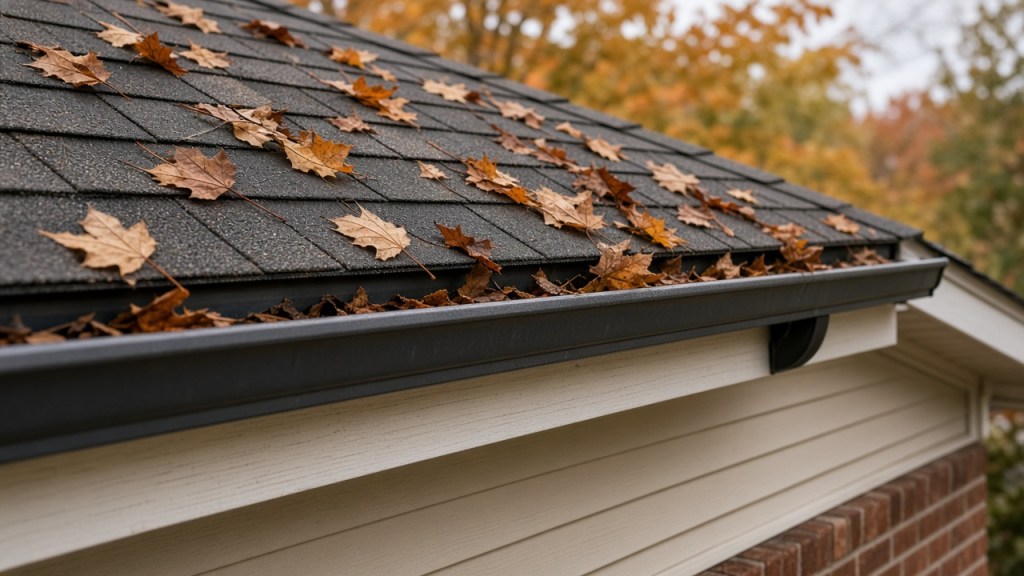
The Tri-State sits in a **mixed-humid** climate pattern: warm-season humidity, meaningful rainfall, leaf-heavy deciduous trees in many neighborhoods, and freezes that typically begin in late October. Gutters that worked fine in July can fail the first big October storm once maple and oak leaves pack the channels.
Building-science guidance from the U.S. Department of Energy’s Building America Solution Center (PNNL) is blunt about roof runoff: a few inches of rain on a roof can produce **thousands of gallons** of water. If that volume saturates soil at the foundation, moisture can wick into basements and crawlspaces—feeding mold risk and durability problems.
**Documented practice target (Building America / EPA Indoor airPlus–aligned guides):** Downspouts should terminate so water discharges **at least about 5 feet from the foundation**, or to an underground catchment system **at least about 10 feet away**—and that underground line should **not** be tied into the perforated foundation drain (which would soak the footing instead of protecting it).
Fall timing: when to clean
A practical Tri-State window:
- **Early-to-mid fall** — Clear the first heavy leaf flush so gutters can handle rainstorms.
- 2. **Late fall (after most leaves drop, before hard freeze)** — Final clean so debris does not freeze in place.
- 3. **After major windstorms** — Spot-check; high winds refill gutters fast.
Homes under heavy tree canopy or near evergreens often need **two** fall passes. Light canopy lots may get by with one thorough late-fall cleaning—still verify after storms.
Ladder safety matters. If gutters are high, roofs are steep, or you are uncomfortable on a ladder, hire a pro rather than risk a fall. Browse local options in the [contractor directory](/contractor-directory/) or [request a contractor](/request-a-contractor/) match.
Homeowner fall gutter checklist
Work through this in order on a dry day:
1. Clear debris from gutters and downspouts
Remove leaves, seed pods, shingle grit, and twigs. Gloves help. Scoop, don’t force clumps down the downspout—that creates a deeper clog.
2. Flush the system
Use a garden hose from the high end of each run toward the downspout. Watch for leaks at seams, end caps, and hangers. If water backs up, clear the downspout (plumbers snake / carefully from below) until flow is free.
3. Confirm slope and hanger security
Gutters should slope toward downspouts. Building America guidance commonly cites roughly **at least 1/16 inch per foot of run** toward the outlet. Look for sagging sections, pulled hangers, or joints that drip when flushed.
4. Check discharge distance and splash control
Extend downspouts so water lands well away from the foundation (see ~5 ft / ~10 ft guidance above). Confirm splash blocks or extensions are aimed **away** from the house and that grade does not reverse flow back toward the wall. A short elbow dumping onto mulch against the foundation is a classic Tri-State basement-moisture contributor—see our basement moisture article in this pack.
5. Inspect related roof-edge details
From the ground (binoculars help), note missing drip edge, pulled fascia, or kick-out flashing problems where a roof meets a wall. Heavy rain that overshoots a gutter can soak siding and window heads. Larger roofing decisions belong in our [roof repair vs replace](/roof-repair-vs-replace-tri-state/) guide.
6. Trim what you can safely reach
Reduce overhanging limbs that drop debris into gutters—**but** stay off power-line work and large canopy pruning. Post-storm hanging limbs are a separate safety topic (see tree-damage article).
7. Decide on guards vs. maintenance
Gutter guards can reduce cleaning frequency; they do not eliminate inspection. Screens still need periodic checks, and some styles change how ice and fine debris behave. Treat guards as a **maintenance tradeoff**, not a set-and-forget guarantee. We do not endorse products here.
Ice, freeze, and mixed-humid reality
Evansville-area winters are not “very cold climate / no gutters” territory in the Building America sense—most Tri-State homes keep gutters—but frozen debris and ice still matter. Clean gutters before hard freezes so water can drain instead of filling troughs that freeze. Ice dams are driven mainly by attic heat loss and roof snowmelt patterns; gutters full of ice can worsen edge problems. Pair gutter work with an attic peek for uneven insulation and air leaks (see attic insulation article).
Cost variables only (no invented local prices)
We are **not** publishing Tri-State price averages. What usually moves a quote:
- Stories / height and ladder/access difficulty
- Linear feet of gutter and number of downspouts
- Material (vinyl, aluminum, steel, copper) and whether sections need replacement vs. cleaning
- Guard installation vs. cleaning-only
- Buried drain extensions or daylight laterals
- Fascia/soffit repair discovered during cleaning
- Emergency after-storm vs. scheduled fall work
Ask for **written scope**: cleaning only vs. repairs, disposal of debris, and whether hangers/seals are included. Use our [hire checklist](/how-to-hire-a-contractor-tri-state/) and [how to read a quote](/how-to-read-a-contractor-quote/) before you sign.
When to call a pro vs. DIY
**DIY-friendly:** Single-story homes, stable ground for ladder feet, light debris, simple extensions you can attach without digging utilities.
**Call a pro:** Two-plus stories, steep roofs, loose/electrified situations, major sagging, or anything near service drops. After severe weather, prioritize safety over curb appeal—see [storm prep](/tri-state-storm-prep-tornado-flood/).
Next steps
- Schedule gutter cleaning on your fall calendar alongside furnace tune-up and hose-bib winterization ([seasonal calendar](/evansville-fall-home-maintenance-calendar/)).
- If basement mustiness follows heavy rain, fix exterior water management first before jumping to interior waterproofing.
- Compare local pros via [the contractor directory](/contractor-directory/) or [request a contractor](/request-a-contractor/).
- For ongoing Tri-State homeowner tips, [subscribe](/subscribe/).
Bottom line
Fall gutter maintenance in the Tri-State is about **timing, discharge distance, and follow-through**. Clean after leaf drop and before hard freeze, flush until water moves freely, push downspout discharge well away from the foundation, and fix sagging or leaking sections before winter storms stack problems. TSHR helps you learn and match—then you hire licensed local help when the job is bigger than a ladder and a hose.
Sources
- DOE Building America Solution Center (PNNL) — Gutters and Downspouts
- EPA A Brief Guide to Mold, Moisture and Your Home — (gutters/grade & humidity)
- EPA Indoor airPlus / ENERGY STAR water-management practices (via BASC citations)
- NWS / local climate context cross-ref via seasonal calendar pack sources (frost timing averages)
Find a local contractor
Browse the Tri-State contractor directory by trade, or tell us what you need and we will hand it to one local contractor in your area. Free to you — contractors pay us, you never do.

Leave a comment