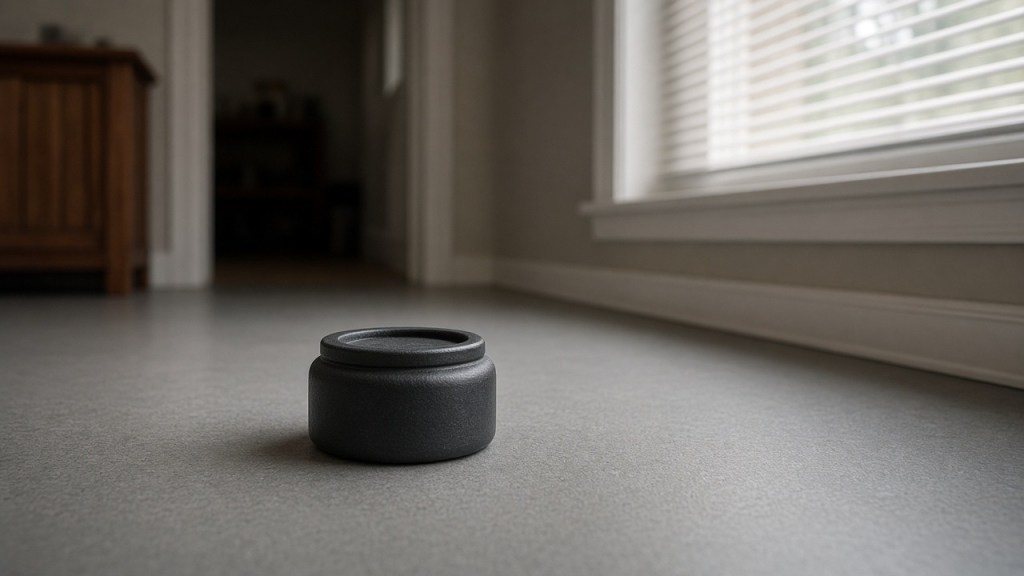
When Tri-State windows finally stay shut for cool nights and furnaces kick on, Owensboro and Henderson, Princeton and Boonville, Tell City and Newburgh, and Carmi households get a practical closed-house window—not a reason to invent a new radon science page. Across the ~60-mile Tri-State—Evansville as the hub, plus Mount Vernon IN (Posey County) and Mount Vernon IL (Jefferson County—different city)—fall into early heating season is when many homes naturally meet the closed-building conditions EPA short-term protocols prefer. This page is a calendar nudge to test (or retest) while those conditions are easy to keep.
This guide is a fall radon test reminder (timing cue). It points you to EPA closed-house rules, kit placement basics, and when to hire a qualified tester—it does not replace full testing guidance from EPA or your state radon office. If you’re already thinking about lower-level air this season, our basement moisture and waterproofing guide pairs well, and the fall furnace checkup belongs on the same autumn list. Tri-State Homeowner Report is homeowner media and a matching service—not a radon mitigator or lab. Soft matching: contractor directory, request a contractor; tips via subscribe.
What this reminder is (and is not)
| Habit | What it is | What it is not |
|---|---|---|
| Fall timing cue | Closed-building conditions often match normal living in heating season | Claiming radon only exists in fall |
| Calendar nudge | “Put a kit on the calendar” plus a closed-house soft checklist | Rewriting EPA action levels or state licensing |
| Retest nudge | After years, renovations, or new lower-level living | Using EPA zone maps to skip a home that “feels fine” |
| Soft next step | Kit or qualified-tester path, then directory matching if you need help | Fake Tri-State mitigation package prices |
EPA’s Citizen’s Guide to Radon and measurement protocols emphasize closed-building conditions for short-term tests: keep windows and exterior doors closed except for normal entry/exit; do not run fans or machines that bring in outdoor air; recirculating heating/cooling may run. For short tests lasting just 2–3 days, close up at least 12 hours before starting as well. EPA protocol language notes that in northern climates, closed-building conditions often exist as normal living from late fall through early spring when windows stay shut—exactly the soft reminder this page is for. You can still test in other seasons; you just have to enforce closed-house rules more deliberately.
EPA’s retest guidance soft-frames: retest if you begin occupying a lower level; you may want to test again even after a result below 4 pCi/L; buyers may ask for a new test if the last result is not recent (for example, within about two years), if renovations changed the house, or if checklist conditions were not met. Fall is a convenient homeowner moment—not a legal deadline invented by TSHR.
Soft fall calendar table
| Cue | Soft read | First move |
|---|---|---|
| Never tested / result unknown | Testing applies year-round; fall makes closed-house easy | Order a kit or hire a qualified tester |
| Last short-term test years ago | EPA soft retest interest; buyer “within ~2 years” theme | Put a short- or long-term kit on the fall list |
| New basement bedroom / office | Lifestyle change → retest that level | Test the newly lived-in lowest level |
| Post-renovation (esp. lower level) | Levels can change; retest after work | Do not treat a pre-reno result as forever |
| Mitigation already installed | Systems need confirmation they still work | Retest months after install; periodic rechecks |
| County free-kit season | Local health departments sometimes stock kits | Call the current county/state radon office—stock changes |
| Severe storms / high winds week | EPA: avoid 2–3 day short tests in unusual storms | Wait for a calmer closed-house stretch |
Soft closed-house checklist (fall edition)
Always follow your kit’s instructions when they are stricter.
- Pick a quiet stretch—not a weekend of open-house parties with doors propped.
- Close windows and exterior doors for at least 12 hours before a 2–3 day short-term test, and keep them closed during the test except normal entry/exit.
- Run the furnace / recirculating HVAC normally; do not run whole-house fans, window fans, or other outdoor-air machines. Small intermittent exhaust fans and an operating radon-reduction system (if you have one) may run per EPA consumer language.
- Place the device on the lowest regularly lived-in level, in a room used often—not kitchen or bathroom—about 20 inches above the floor, away from drafts, high heat, high humidity, and exterior walls (Citizen’s Guide placement summary). CDC soft summaries often say roughly three feet—follow the kit when numbers differ.
- Do not disturb the device; log start/stop times exactly.
- Mail/process promptly after the exposure window—short-term labs often have strict arrival clocks.
- Read results against the EPA/CDC action frame: fix at ≥ 4 pCi/L; consider action 2–4 pCi/L; aim as low as practical—no known safe level.
Why fall (without overselling season)
EPA measurement-device protocol language notes that closed-building conditions generally exist as normal living in colder periods, and that some houses show relatively stable levels in late fall / early spring when windows stay shut even before continuous heating. That is a convenience and protocol-fit argument—not proof that summer radon is “safe.” EPA’s rule still stands: test every home; zone maps are for targeting resources, not for skipping your address. Vanderburgh and peer counties still need kits whether you test in October or March.
DIY kit vs qualified tester
Homeowner-scale when: You can maintain closed-house conditions, follow kit placement and mail windows, and you are screening your own occupied home (not a high-stakes transaction).
Qualified tester when: Buying or selling; you cannot keep closed-house conditions; you need continuous monitors or formal protocols; results are elevated and you need a licensed mitigation path; or state rules prefer credentialed testers for your situation. Indiana, Kentucky, and Illinois radon offices keep qualified lists—verify current licensing before you hire. Soft-browse the contractor directory or request a contractor for matching help; TSHR does not certify radon pros.
Cost note (no fake Tri-State prices)
National Radon Program Services (sosradon.org) list prices for short- and long-term kits (commonly discussed as roughly $20 short-term / $30 long-term class including analysis) are national estimate figures as stated on that program page—not Tri-State store quotes. County free-kit events, when offered, change without notice. No invented Evansville / Henderson / Owensboro mitigation package prices appear here. Mitigation system costs belong to a written local quote after testing—not this timing cue.
Testing with a consumer kit is not framed as a building-permit topic; mitigation installation rules vary—verify with licensed contractors and state programs if you remediate.
Sources and further reading
- U.S. EPA — A Citizen’s Guide to Radon (closed-house; placement; 4 pCi/L / 2–4 consider; short- vs long-term)
- U.S. EPA — Indoor radon measurement device protocol themes (closed-building; late fall–early spring normal living in northern climates)
- U.S. EPA — How often to test/retest (lower-level living; future retest; buyer “recent” / renovation themes)
- CDC — Testing for radon in your home (timing triggers; DIY placement summary)
- Basement moisture and waterproofing (lower-level air companion)
- Fall furnace checkup and the fall home maintenance calendar (same autumn checklist)
Next step
Use fall’s closed windows as the easy closed-house moment—then follow EPA’s kit, placement, and action guidance, not a zone-map skip. For seasonal tips, subscribe. When results are elevated or you need a credentialed tester or mitigator, browse the contractor directory or request a contractor.
