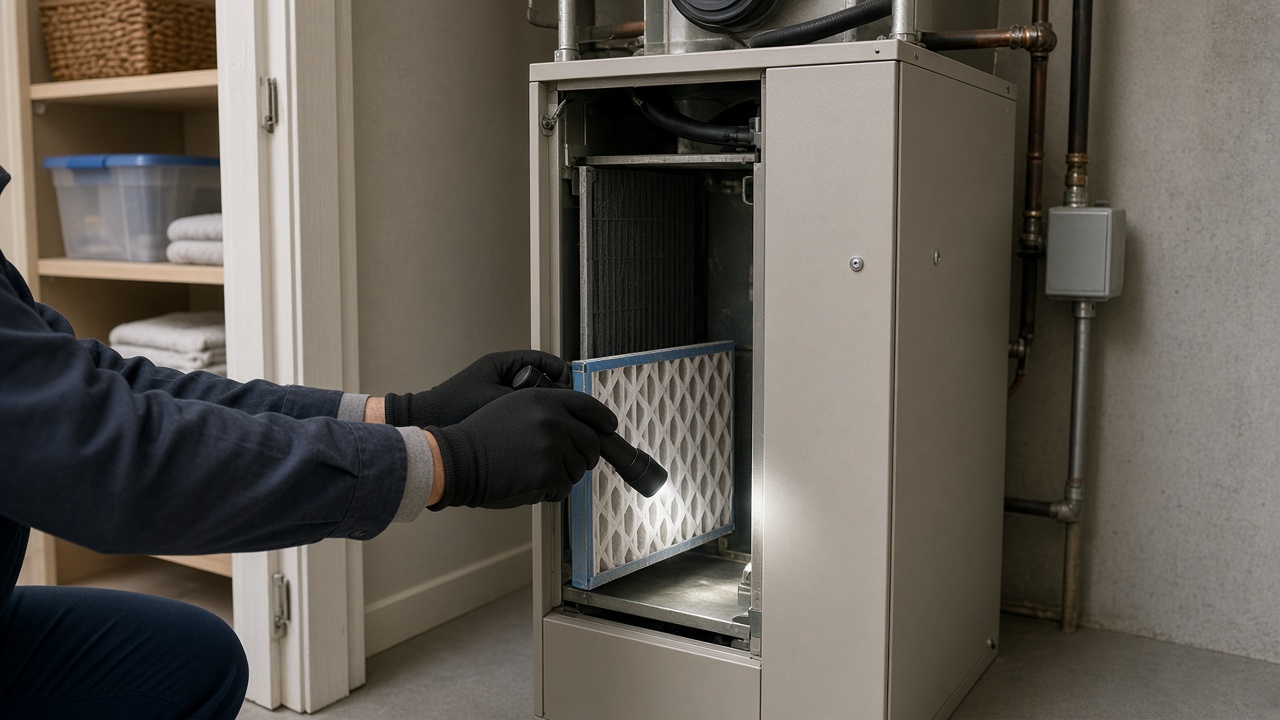
Before the first hard freeze settles over the Evansville Tri-State—Evansville, Newburgh, Chandler, Boonville, Henderson, Owensboro, Princeton, and nearby towns—most gas, electric, and heat-pump homes benefit from a simple question: is the heat ready, or are we discovering problems on the coldest night? This guide is calm pre-winter readiness, not a scare piece. Small DIY tasks help; a licensed HVAC visit catches what you cannot see.
Tri-State Homeowner Report (TSHR) is Editorial + SEO and a matching service, not a contractor or HVAC company. Dollar figures below are ESTIMATE labels from citeable public sources—not local quotes or TSHR market data.
Browse the contractor directory or request a contractor when you want local pro matches. Subscribe for seasonal reminders.
Why fall timing matters here
Tri-State winters are not Upper Midwest brutal every year, but arctic dips, damp cold, and freeze–thaw still punish neglected systems. Humid summers mean many furnaces sit idle for months; dust, forgotten filters, and untested thermostats show up when you finally call for heat. Scheduling a checkup in late summer through mid-fall usually beats waiting until the first 20°F morning—when every tech’s calendar is already full.
Angi’s public furnace-inspection guidance: check at least once a year, typically ahead of winter; many households pair fall heat service with spring AC service for year-round HVAC hygiene.
ESTIMATE bands for inspections & tune-ups (national)
Label: ESTIMATE — not Tri-State quotes.
| Service language in public sources | ESTIMATE band | Source type |
|---|---|---|
| Furnace inspection (broad) | About $50–$300; Angi average language near $100 | Angi furnace inspection cost (2026) |
| Basic inspection framing | Often about $80–$100 | Angi |
| Inspection + light cleaning / advanced | About $125–$200 | Angi |
| Tune-up add language | About $130–$200 when a system needs more than a look | Angi |
| By fuel type (inspection) | Electric ~$70–$150; gas ~$80–$175; oil ~$100–$200 | Angi type table |
| Filters (homeowner purchase) | About $1–$35 each | Angi / HomeAdvisor filter ranges |
| Emergency HVAC labor language | About $150–$215 / hour in Angi emergency framing | Angi |
| Furnace repair (if issues found) | HomeAdvisor normal range about $133–$505; average near $318 | HomeAdvisor furnace repair |
Off-season scheduling (spring through late summer) is often discussed as the lower end of inspection pricing; peak fall/winter demand can push calendars and rates. Your Tri-State bid can sit outside any national table.
DIY checklist (safe homeowner tasks)
These are homeowner-level habits—not a substitute for combustion testing or heat-exchanger inspection:
- Replace or clean the filter — Many standard filters are discussed on a 1–3 month cadence (about every 90 days in Angi maintenance language); thicker media filters may last longer—follow the slot size and manufacturer guidance. A clogged filter strains blowers and cuts airflow.
- Clear the area around the furnace — Keep boxes, paint, and clutter away from the cabinet and intake paths.
- Vacuum dust at vents and returns — Simple dust removal at registers helps airflow; it is not a full duct cleaning.
- Test the thermostat — Confirm heat mode, set a temperature a few degrees above room temp, and listen for a clean call for heat. Replace thermostat batteries if your model uses them.
- Walk the house for drafts — Weather-strip and close storm windows where it helps; this is comfort and efficiency, not furnace repair.
- Test smoke and CO alarms — Press test buttons monthly; replace batteries on the schedule the manufacturer prints on the unit.
If you smell gas, hear booming or grinding that is new, or a CO alarm sounds, leave the DIY list—ventilate if appropriate, follow your gas utility’s emergency guidance, and call qualified help.
Carbon monoxide alarms (CPSC-aligned, no scare tactics)
Fuel-burning furnaces are one reason every Tri-State home needs working carbon monoxide (CO) alarms. The U.S. Consumer Product Safety Commission (CPSC) recommends battery-operated CO alarms—or plug-in alarms with battery backup—on every level of the home and outside sleeping areas. Interconnected alarms are best so that when one sounds, they all sound. Follow the manufacturer’s placement instructions; CPSC advises against putting CO alarms in kitchens or directly above fuel-burning appliances.
A CO alarm is added protection, not a substitute for professional appliance maintenance. Test monthly; replace units when they reach end-of-life (many have a replace-by date on the back).
What a pro visit typically covers
A thorough fall visit is more than “filter and go.” Public tune-up checklists commonly include some mix of:
- Heat exchanger visual inspection for cracks or corrosion
- Combustion / CO testing where fuel-burning equipment is present
- Burner, flame sensor, and ignition checks
- Blower and electrical connection inspection
- Venting / flue draft awareness
- Thermostat operation and heat-cycle test
- Filter service and basic cleaning
Ask what is included vs. billed as repair. A low lead-in price that always ends in a long parts list is a sales process—not a red flag by itself, but a reason to get a second opinion on big-ticket findings.
Permits (soft): Routine maintenance rarely needs a building permit; equipment replacement or gas-line changes can. Confirm with your local building department if the scope goes beyond a standard service visit.
DIY vs. call a pro — quick cues
| You can usually handle | Call a qualified HVAC pro |
|---|---|
| Filter changes on schedule | Furnace won’t stay lit / no heat |
| Thermostat battery / simple setpoint checks | Burning, electrical, or unfamiliar odors when heat runs |
| Testing CO / smoke alarms | CO alarm activation |
| Keeping the cabinet area clear | Squealing, grinding, repeated short-cycling |
| Noting higher bills and describing symptoms | Visible rust, soot, or water where it does not belong |
| Any gas-smell concern |
HomeAdvisor’s public repair guidance still applies: jump on small issues early; compare quotes when repairs get large; check warranty coverage before you authorize parts.
Tri-State planning tips (without the drama)
- Book before the rush — Late August through October is friendlier than the first ice storm.
- Know your system — Gas, electric, dual-fuel, or heat pump? Age and last service date help the dispatcher.
- Filters on a calendar — Phone reminders beat “I thought we just did that.”
- Generators & space heaters are separate topics — If you use backup heat, keep CO awareness high and follow appliance instructions; never use outdoor-rated equipment indoors.
- After severe weather — Power surges and outages can stress controls; if heat fails after a storm, treat it as a pro diagnosis day, not a weekend experiment.
When to get more than one quote
For a standard inspection/tune-up, many households stick with a trusted company year after year. For repairs over a few hundred dollars, or any replacement conversation, get 2–3 written scopes that spell out parts, labor, and warranty. Use our how to hire a contractor checklist mindset.
Ready for local matches? Visit the contractor directory or request a contractor. For more seasonal homeowner timing across the Tri-State, subscribe.
Sources
- Angi — Furnace Inspection Cost (2026 bands, fuel-type table, tune-up language, filter costs). View source (angi.com)
- Angi — Furnace Servicing: How Often You Should Do It. View source (angi.com)
- HomeAdvisor — Furnace Repair Cost (repair ranges; tune-up/inspection maintenance framing). View source (homeadvisor.com)
- U.S. CPSC — Carbon monoxide alarm placement guidance (every level; outside sleeping areas). View source (cpsc.gov)
- CPSC — CO Alarms overview. View source (cpsc.gov)
Soft CTAs only.
