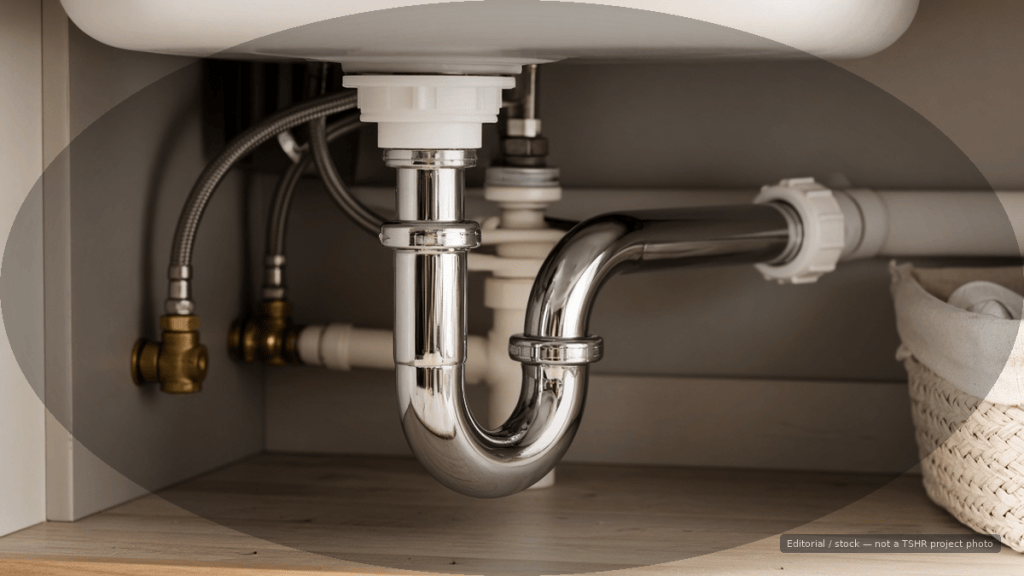
The P-trap is the U-shaped bend in the drain pipe under your sink. It holds a small plug of water that stops sewer gas coming back up into the room, and it is also where everything that goes down the drain and should not have — hair, grease, a wedding ring — ends up first. Clearing one is a fifteen-minute job with a bucket and a pair of hands, and it is the single most useful piece of plumbing most homeowners never learn.
When the trap is the problem
Signs it is the trap and not something deeper: the sink drains slowly or not at all while every other drain in the house is fine; there is a persistent smell at that one sink; or you dropped something small down it and want it back. If several fixtures are slow at once, or a toilet gurgles when the sink drains, the blockage is further down the line and this is not your fix.
Before you touch anything
- Do not pour drain chemicals first. If the trap still will not clear, you are about to open a pipe full of caustic liquid over your own hands. Chemicals also damage older pipes and make a plumber’s job worse if you end up calling one.
- Empty the cabinet. Everything out, so the floor is dry and you can see.
- Put a bucket underneath. The trap is full of water by design and it is all coming out. A shallow baking tray works where a bucket will not fit.
- Have a torch and gloves. Old trap water is genuinely unpleasant.
The job, step by step
- Loosen the slip nuts by hand. There are two — one where the trap meets the pipe coming down from the sink, one where it meets the pipe going into the wall. On plastic traps they almost always turn by hand. If you need pliers, wrap the nut in a rag first so you do not crack it or chew the flats.
- Drop the trap into the bucket and let it drain fully. Tip the U out into the bucket — this is where the ring is, if you are looking for one.
- Clean it out. An old toothbrush or a bottle brush and hot soapy water. Get the inside of the bend properly, not just what you can see from the ends.
- Check the washers. Each slip nut has a tapered plastic washer. Look for cracks, flattening or hardening. They cost very little and are the usual cause of a drip after reassembly — if in doubt, take one to the hardware shop and match it.
- Check the pipe in the wall. Shine the torch in. If the blockage is in there rather than in the trap, a hand auger will reach it; that is a different job and it is fine to stop here and call someone.
- Reassemble in the right order. Washer on, tapered edge facing the joint, then the nut. Hand-tighten both, make sure the trap is sitting square and not cocked at an angle, then give each nut a small extra nip — a quarter turn, no more. Overtightening plastic threads is how you turn a clean job into a new trap kit.
- Run water and watch. Fill the basin, let it out all at once so the joints see real flow, and put a dry hand or a sheet of kitchen paper under each nut. Any damp means it is not right. Nip it slightly, run it again — and if it still weeps, take it apart and replace the washer rather than tightening harder.
Keeping it clear
Grease is the main offender at a kitchen sink — it goes down warm and sets solid in the bend. Pour cooking fat into a tin and bin it instead. In a bathroom, a cheap hair catcher over the drain stops most of what causes the slow drain in the first place. And a sink nobody uses — a spare bathroom, a basement utility sink — will eventually lose its trap water to evaporation and start smelling of sewer gas; running the tap for ten seconds once a month refills the trap and fixes it.
When to call a plumber
Stop and call someone if more than one fixture is backing up, if a toilet gurgles when the sink drains, if the pipes are metal and the nuts will not move without real force, if you find corroded or crumbling pipe behind the trap, or if there is any sign of water damage in the cabinet base. A cabinet floor that is soft has been leaking for a while, and that is a repair, not a clean-out.
Find a local contractor
Browse plumbers in the Evansville Tri-State, or tell us what you need and we will hand it to one local contractor in your area. Free to you — contractors pay us, you never do.
 Tri-State Homeowner Report
Leave a comment