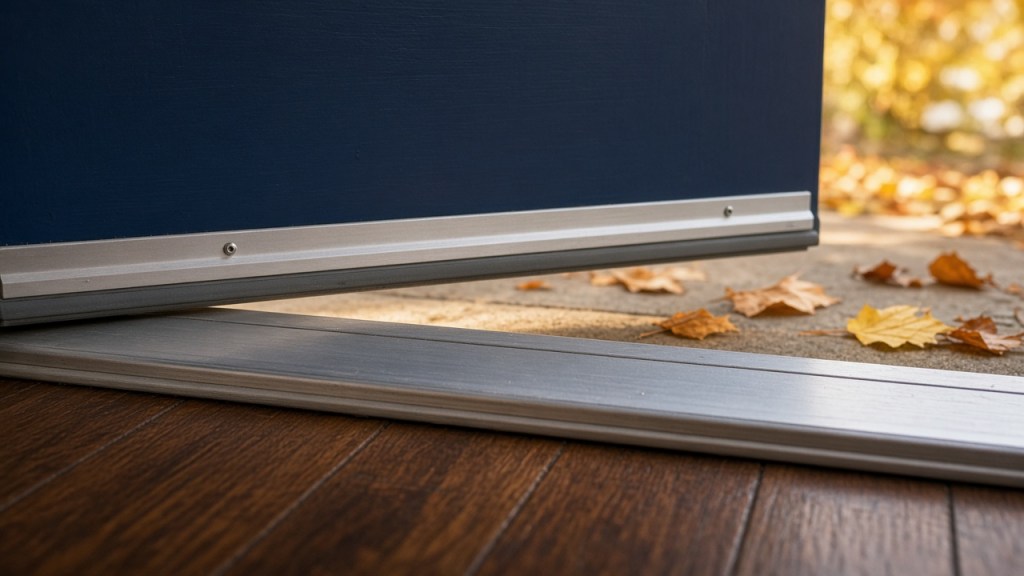
A pencil-wide gap under a front or side door can feel like a constant cold ribbon once nights in Owensboro and Henderson, Princeton and Boonville, Tell City and Newburgh, and Carmi turn to heating season. Across the ~60-mile Tri-State (Evansville as the hub, plus Mount Vernon IN in Posey County and Mount Vernon IL in Jefferson County, a different city), an exterior door sweep and threshold draft check is one of the fastest fall air-sealing habits to try before you assume every window needs new glass.
This guide covers the bottom of hinged exterior doors: the sweep and the threshold seal. It is not about overhead garage door seals, window weatherstripping, or carbon monoxide detector placement, which are separate jobs. For the bigger picture on keeping heat in, see our guide to attic insulation in older homes, and for the rest of your autumn list, the fall home maintenance calendar. Tri-State Homeowner Report is homeowner media and a matching service, not a weatherization contractor. When you want local help, browse the contractor directory or request a contractor; for seasonal reminders, subscribe.
What this check is (and is not)
| Habit | What it is | What it is not |
|---|---|---|
| Bottom gap check | Looking for daylight or draft under a closed exterior door | A sales pitch for a whole new door |
| Sweep and threshold | Adjusting or replacing the door sweep and inspecting the sill seal | Window caulk and weatherstripping |
| Entry, mudroom, and garage-entry doors | Hinged doors to the outdoors or to unconditioned spaces | The bottom seal and safety sensors on an overhead garage door |
| Air-sealing layer | One small piece of keeping conditioned air inside | A whole-house blower-door retrofit |
The U.S. Department of Energy’s Building America Solution Center treats door sweeps as weatherstripping at the bottom of exterior doors to limit air leaks, drafts, weather, and pests. Doors next to unconditioned spaces, such as a garage, an enclosed porch, or an attic access door, get the same treatment. ENERGY STAR and DOE weatherization education pair jamb weatherstripping on the top and sides with a tight-fitting sweep at the sill, while the door still opens and closes smoothly.
Draft cues to watch
| Cue | What it likely means | First move |
|---|---|---|
| Daylight under a closed door | Sweep missing, worn, or set too high | Adjust or replace the sweep |
| Cold ribbon at your ankles | Bottom gap plus possible threshold wear | Check the sweep and sill in the same visit |
| Sweep drags or door is hard to close | Sweep set too low, or the door is warped | Raise or adjust; don’t force the hinges |
| Cracked vinyl or missing brush | Failed seal insert | Replace like-for-like or upgrade the type |
| Loose threshold screws or water cupping at the sill | Threshold or flashing concern | Snug the screws; call a pro if water is getting in |
| Door from the house to the garage | Treated as an exterior door | Sweep plus weatherstrip, same as an entry door |
| Pet door cut into the entry | A separate leak path | Check its flap and seal on its own |
A homeowner-scale inspection, step by step
- Close the door in daylight and look for a line of light at the sill from inside.
- Feel for a draft on a windy day, or hold a tissue near the bottom edge. This is a simple homeowner check, not a calibrated blower-door test.
- Inspect the sweep: vinyl blade, brush, or bulb. Look for tears, flattening, or a sweep that falls short of the threshold.
- Inspect the threshold: it should be level enough for contact, with no major rust-through or soft wood at the sill.
- Check the jamb weatherstripping on the top and sides. Corners should meet, and the door should latch without slamming.
- Operate the door after any adjustment. The sweep should touch the threshold firmly without making the door hard to open or close.
- Walk your other exterior doors the same weekend: front, side, basement walk-out, and the door between the house and garage.
Adjusting or replacing a sweep
Building America’s Install or Replace Door Sweeps DIY guide lays out a practical sequence. Choose a sweep that matches your door’s thickness and traffic (aluminum, vinyl, brush, wrap-around, adhesive, or screw-on styles). Remove the old sweep and measure the full door width, since gaps at the ends invite drafts and pests. Cut metal or plastic with a hacksaw and vinyl with a utility knife or scissors. With the door closed, position the sweep so its flexible edge touches the threshold and sits level, mark the screw slots so you can adjust later, drill pilot holes, and test before final tightening. Raise or lower it until contact is continuous without binding.
DOE weatherization job aids add a few habits: fix loose hinges or strike plates before adding new seals, apply weatherstripping to clean and dry surfaces, and make sure the seals don’t keep the door from working. The goal is less air leakage with a door that still closes easily.
A caution: don’t aggressively plane a fire-rated or warped exterior door on your own. If the jamb is rotten, the threshold leaks into the subfloor, or the door is out of square beyond what a sweep can fix, bring in a pro rather than stacking thicker sweeps every year.
DIY or bring in a pro?
Homeowner-scale when: a screw-on or adhesive sweep fits the door, the threshold is sound, the jamb weatherstrip replaces cleanly, and the door still latches and clears the flooring.
Worth a pro when: the sill is rotting, water regularly gets under the threshold, a fire door or specialty hardware is involved, the house-to-garage door raises combustion-air questions beyond a sweep, or you want a quote on a full ENERGY STAR door upgrade. Browse the contractor directory or request a contractor, and our guide to reading a contractor quote helps when bids come in. Carbon monoxide and smoke alarm placement are separate safety checks; a door sweep doesn’t replace them.
How this fits with the rest of fall sealing
| Task | What it covers | How it relates to a door sweep |
|---|---|---|
| Window weatherization | Caulk and weatherstrip around window sashes and trim | A separate leak path; check both the same weekend |
| Overhead garage door seal | The rubber bottom seal and safety photo-eyes | A different door type from a hinged man-door |
| Shed or outbuilding doors | Weatherstrip on unheated outbuildings | Lower priority than doors into living space |
| Attic insulation | Heat loss through the ceiling | Usually the bigger energy item; the sweep is the quick fix |
While you’re working around doors and windows, our guide to cleaning, inspecting, and storing window screens pairs well with this check, and our tub and shower caulk inspection covers the indoor side of sealing season.
A note on cost
Door sweeps, threshold kits, and weatherstrip sets are national retail estimates until you check a local shelf price. ENERGY STAR’s Seal and Insulate education commonly cites savings of up to about 10% on annual energy bills from sealing and insulating as a whole, which is not a promise that a single sweep delivers that figure. We don’t publish made-up Evansville, Henderson, or Owensboro “door weatherization package†prices. Ordinary like-for-like sweep and weatherstrip replacement isn’t typically treated as a building-permit project.
Sources and further reading
- DOE Building America Solution Center, Install or Replace Door Sweeps (measure full width, touch the threshold, adjust for smooth operation, doors to unconditioned spaces)
- DOE Building America Solution Center, air sealing doors adjacent to unconditioned space
- DOE Weatherization Assistance Program job aid, installing weatherstripping on an exterior door
- ENERGY STAR, Seal and Insulate guidance
- Related on this site: attic insulation in older homes and the fall home maintenance calendar
Look for daylight, then adjust
Close the door, look for light at the sill, then measure, cut, set the sweep so it touches the threshold, and adjust until the door latches smoothly. For seasonal reminders like this one, subscribe. When sills are soft or a door won’t square up, browse the contractor directory or request a contractor.
